Why Every User Should Use a Contract Scanner Before Signing Anything in the UAE A weak contract process is not a back-office nuisance, it is a money problem. Deloitte and DocuSign's 2026 research put the annual global economic value lost to poor agreement management at $2 trillion, and 48% of businesses reported significant damage to customer relationships from agreement delays. If large companies lose that much from messy paperwork, everyday users contract review should be treated with the same seriousness before anyone signs a lease, employment offer, service agreement, or home purchase document.
What a contract scanner actually does
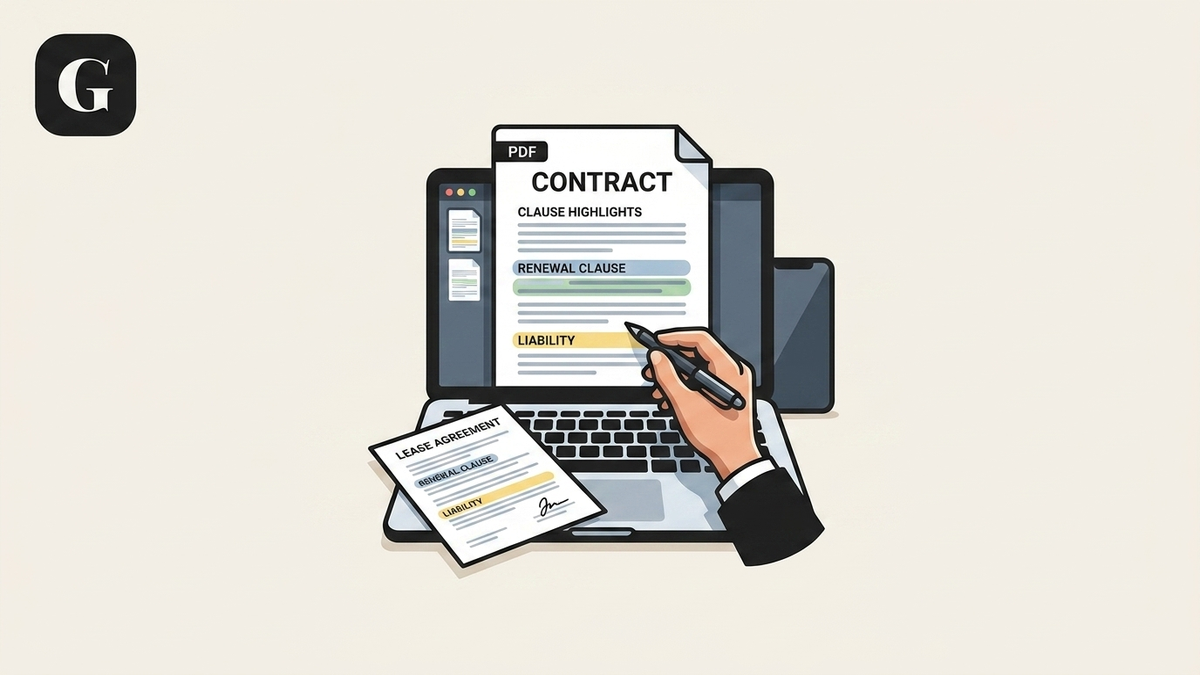
A contract scanner is not a magic red pen. It is a legal document scanner that reads a PDF or uploaded file, identifies the agreement type, and points to clauses that deserve attention before signature. The useful version does three things well: it tells you what kind of contract you are holding, flags terms that are unusually risky, and translates legal language into plain English. That matters because the danger in contracts is rarely the headline price. It is buried language, a missed renewal date, or a clause that shifts cost and liability onto the signer. In the UAE, that can mean a tenancy clause about rent escalation, an employment term about notice, or a sales agreement with cancellation language that looks harmless until a dispute starts. A simple contract scanner gives readers a way to scan contracts before signing without pretending they have legal training. The point is not to replace judgment. The point is to make the document readable enough that judgment is possible.
Why contract risk starts with human error
The biggest contract failures are usually boring, which is exactly why they are dangerous. Ironclad's 2025 contract management statistics said 92% of contract management errors are caused by human error, including miskeyed dates and wrong templates. World Commerce & Contracting's 2025 research also found that businesses lose an average 9.2% of annual revenue to contract mismanagement. Those numbers explain the real problem for non-lawyers. Most people are not defeated by bad intent in the document. They are defeated by small mistakes, or by signing terms they did not notice because the wording was dense and the pressure to move fast was real. In practice, everyday users contract review works best when the reader checks for four failure points: the parties named in the agreement, the dates and renewal terms, the payment and penalty structure, and any clause that changes who carries legal risk. If a contract scanner helps surface those four items clearly, it has already done meaningful work.
The clauses UAE users should inspect first
UAE contracts often turn on clauses that look routine to a casual reader but carry real consequences once the ink dries. The first is the termination clause. If the contract does not clearly explain how either side ends the agreement, the signer may be stuck in a longer commitment than expected. The second is the renewal or auto-renewal clause. A lease, subscription, or service agreement can roll forward if notice is missed, and that missed notice is usually a timing problem, not a legal theory problem. A contract scanner helps expose that date logic immediately. The third is liability and indemnity language. In plain English, this is where one side tries to push losses, claims, or legal costs onto the other side. A legal document scanner should surface that language because it is often drafted in dense, formal wording that hides the real risk. The fourth is jurisdiction and governing law. For UAE users, this is not a minor detail. It tells you which legal system and forum will control the dispute, and that can affect cost, language, and procedure. Tools like Graysen approach this by tying the explanation back to UAE-specific sources instead of flattening everything into generic contract advice.
How a simple contract scanner helps before you sign
The best use of a contract scanner is sequential, not random. First, it identifies the document type, such as lease, employment, NDA, or service contract. Second, it extracts the clauses most likely to affect money, timing, or liability. Third, it explains those clauses in everyday language so the user can decide whether the wording matches the deal they thought they were accepting. That workflow is useful because it reduces the cost of misunderstanding, not just the time spent reading. McKinsey and other management research have repeatedly shown that enterprises lose value when work is fragmented across disconnected handoffs, and Deloitte's 2026 data found 18% extra time is spent on agreements because workflows are disconnected, equal to 55 billion hours wasted globally per year. The lesson for individuals is simple: if process breakdown is expensive at enterprise scale, it is even more punishing when a tenant or employee signs without clarity. A strong scan contracts before signing routine should produce a risk-ranked view, not just a highlight reel. Readers need to know which clauses are high risk, which are standard, and which need a human lawyer if the stakes are high. That is the difference between information and confidence.
What to do when the scan finds a red flag
A red flag does not always mean reject the document. It means stop treating the contract as routine. If the issue is a date, a fee, or a renewal term, ask for the clause to be rewritten in plain terms. If the issue is liability, jurisdiction, or unilateral termination, ask whether that allocation of risk is actually what was negotiated. The practical rule is simple: do not sign until the clause can be explained back to you in one sentence. If you cannot say who can end the contract, when it renews, who pays when something goes wrong, and where a dispute would be heard, you are not ready to sign. That is why the best legal document scanner is a confidence tool, not a substitute for legal advice. It makes the document legible enough to know when you need a lawyer, and legible enough to know when you do not.
The smartest first move Open the contract, run it through a contract scanner, and inspect only four items first: termination, renewal, liability, and jurisdiction. If those four clauses are clear, the rest of the document becomes much easier to judge. If they are not clear, pause and ask for a revised draft before you sign.